Play a Directive Card
Most turns start here: play a Directive to question, pressure, explore, mislead, or bluff your way into new information. Then either end your turn and draw 1 fresh Directive, or claim Evidence instead.

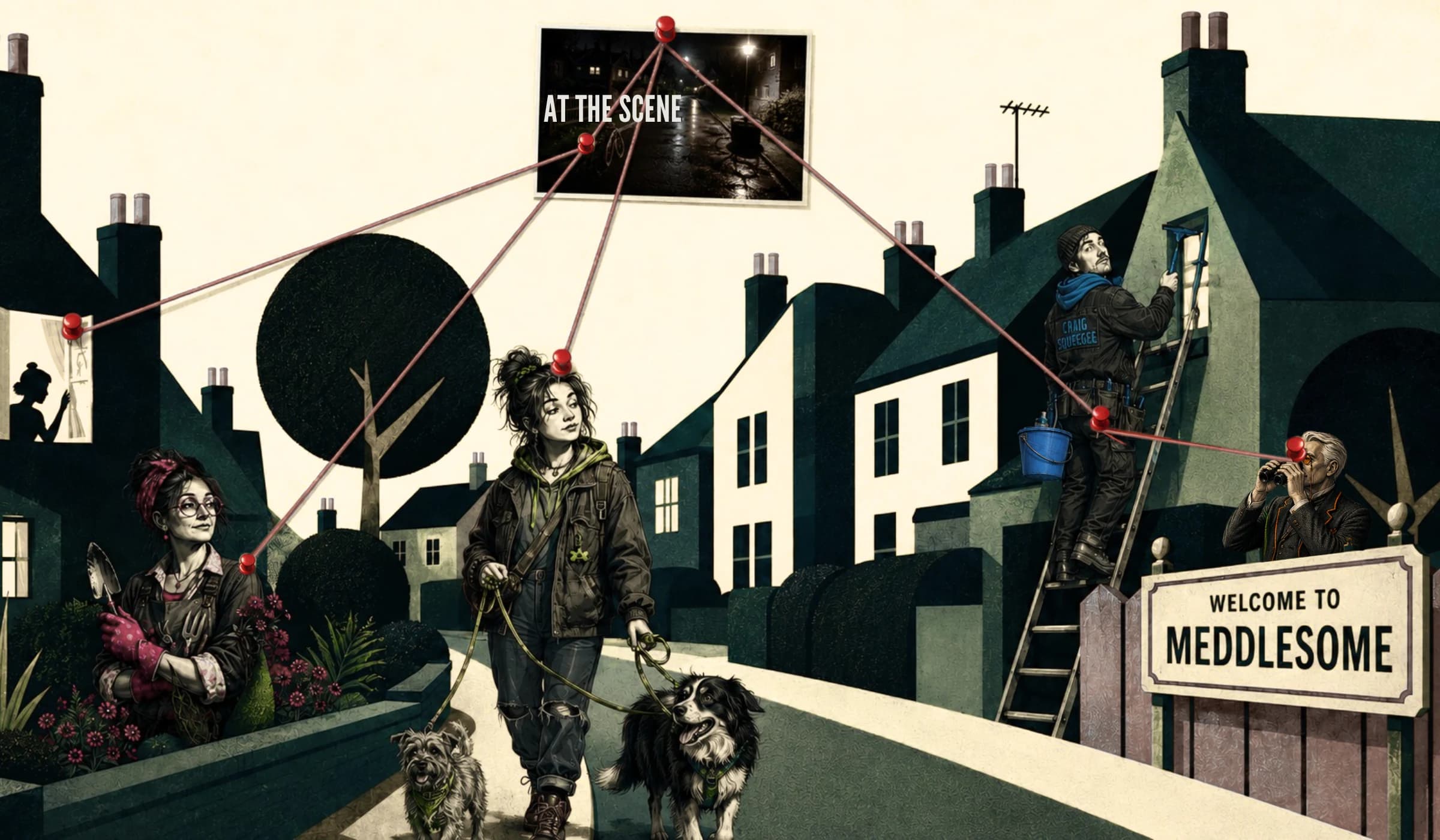
A SOCIAL DEDUCTION GAME WITH A KILLER TWIST
How To Play
Murderful is a social deduction mystery where the real crime scene is hidden inside the game. Work together, question the neighbours, pressure each other, bluff, lie, and follow the clues until someone is ready to accuse. Find At The Scene and make the correct accusation before the room does.

4-8 players

Best with 5-6

20-45 minutes

Online in browser

Live message feed

1 host requests access
Section 1
At the start of a game, every player receives an Identity Card, a Suspect's Psyche Card, an Alibi Denial, and a hidden Alibi. That is your starting case file.
Identity and Psyche tell you who you are in the room. Alibi Denial helps shape what the room hears first. Hidden Alibi is part of the deeper truth you are trying to uncover.

Section 2
Your Alibi Denial is the public version of your story. You choose one printed line from the card and read it aloud, and that becomes part of how the rest of the table begins reading you.
This is where Murderful starts sounding human. Some lines feel calm. Some feel rehearsed. Some feel like somebody trying very hard not to look worried.

Section 3
Your Identity Card tells the table who you are. Your Suspect's Psyche Card shapes how you play and gives you a special ability you can use once per game.
This is not just a puzzle with labels on it. You are performing a neighbour while trying to work out which neighbours are too polished, too helpful, or just a little too ready with an answer.

Section 4
Most turns begin with a Directive. Play one to create information, put pressure on a story, or make the room question what it thought it knew. Then decide whether the moment calls for patience or a public lead.
The Nosy Neighbour token passes clockwise at the start of each round. When an effect triggers it, its holder gets to put one extra yes-or-no question to the target. Use the turns to build a case, but keep an eye on who is suddenly being asked to explain themselves.
Most turns start here: play a Directive to question, pressure, explore, mislead, or bluff your way into new information. Then either end your turn and draw 1 fresh Directive, or claim Evidence instead.
Claiming Evidence gives you a timely tool or a sharper lead, but it ends your turn with no draw. Is the information in front of you worth more than the fresh Directive you will miss?
Some Directives let you secretly view a player's Alibi. Or claim Witness Statement from the Evidence Board as your whole turn, with no draw, to view a Street Alibi. A neighbour may still foil the view, so choose your moment with care.
Section 5
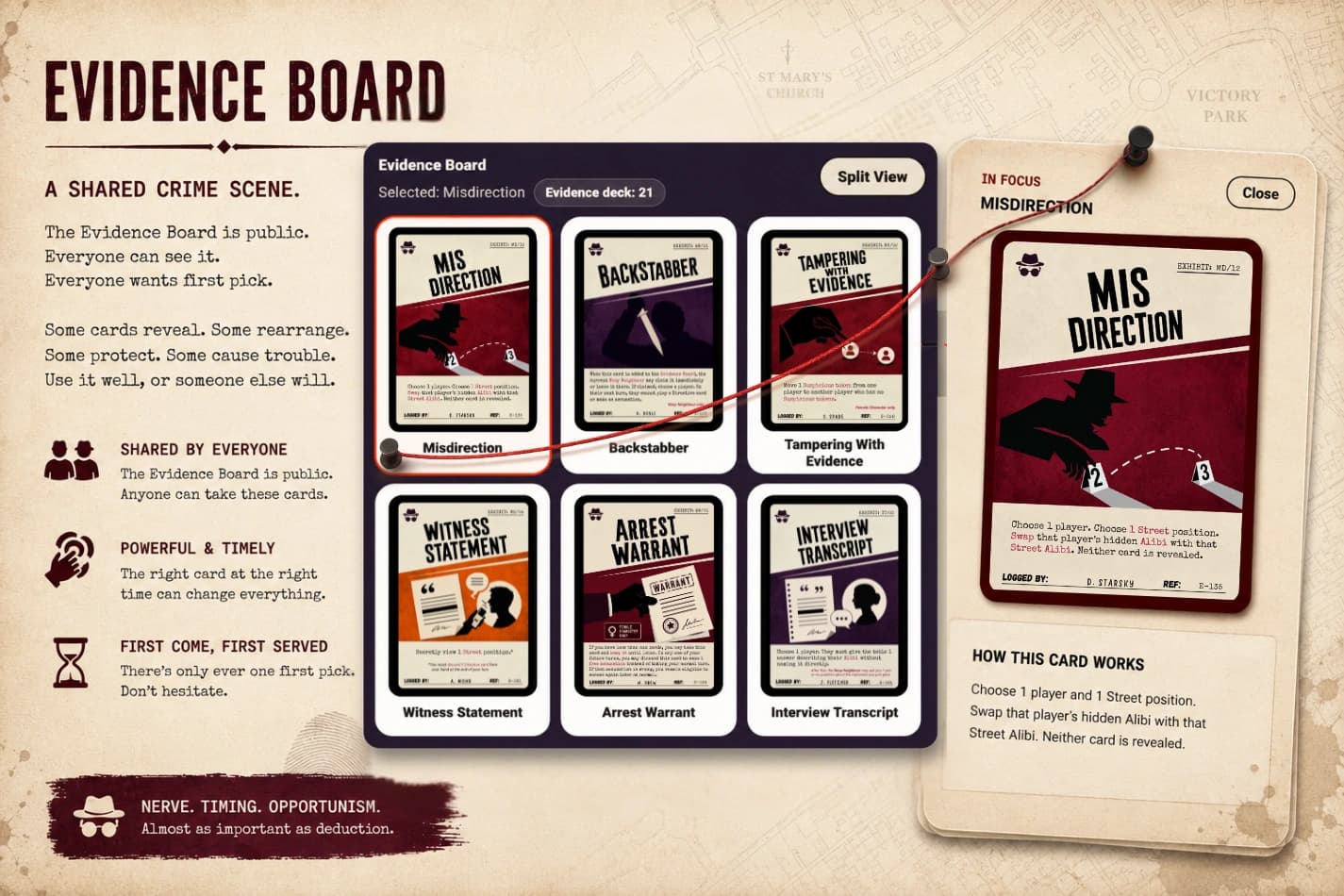
From Round 3 onward, if you are sure, you can say so. Choose 1 player or 1 Street position, and turn that Alibi over in front of everyone.
If it is AT THE SCENE, the case is closed. You win, right there.
your own Alibi flips too, whether you like it or not. You are still in the game, but you are out of the running to win by accusation, and the whole table just watched exactly where your certainty cracked.
if your own Alibi turns out to be AT THE SCENE, the case goes cold for everyone. Nobody wins.
Some cards can bend that story later, but this is the normal risk every accusation carries.
Section 6

Open the case
If you are ready to gather a group, request access and open a room. If you want the wider picture first, head to the About page and see where Murderful is in development.